Koreans today say that we are three types of people – 배달 (Bae Dal) / 백의 (White Clothing) / 겨레 (Gyeo Reh), but unfortunately, when you ask what these mean, no one has any answers… some thinks that it’s the delivery app because 배달 (Bae Dal) can also mean delivery or that Koreans likes to wear white for being clean, and for 겨레 (Gyeo Reh), there is almost no knowledge at all but there are so many cultural references like 한겨레 Newspaper fighting against Japanese Colonial powers; and yet, no one really knows what these mean… so I wanted to share information that I have gathered so far.
In the controversial book 환단고기 (Hwan Dan Go Ghi), it talks a lot about history that is hard to believe for Koreans and is a taboo in Korea due to its extraordinary claims, and even many Korean scholars take it as false – the book was supposedly put together in 1911 by combining 4 books that do not exist any more, and later published in 1979. Many Chinese / Japanese historians pointed out that word usages or phrasing is out of time or generation so the book must be false… Korean scholars who don’t agree with the book says that because Korea was annexed by Japan in 1909, the book was an aim to strengthen our Korean Nationalistic pride to fight against the Japanese colonial power, just as how Hitler used the general historical hate against the Jews in Europe to unify the 게르만 (German) for his own personal agenda.
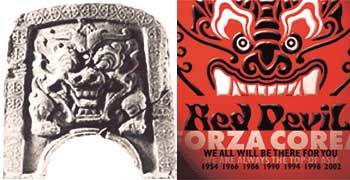
Due to the fact that Korea only has 2 history books left that talk about our ancient history (삼국사기 / 삼국유사), Korea is at the mercy of Chinese or Japanese books, so the records tend to be biased view of Korea from the outsider perspective, and China always recorded degrading and untrue information or just simply omitted to record them since China constantly lost like the Sui – Goguryo war where 1.13million men were defeated… this is the 2nd campaign, and the 1st campaign by the Founder of Sui, 문제, where it started by Goguryo throwing the first blow and angering Sui, but ended with no response due to natural disasters the record says… the natural disaster must have been so extraordinary to cancel the retaliatory War to punish Goguryo who dishonored the Founder of Sui… there clearly is a big chunk of information that were omitted to belittle the defeat of the 1st failed campaign… and we won’t know the truth now forever until new discoveries are made… Ancient Korean textual history is limited to what’s available, and even in the currently established notion of Far East Asian history, there are many holes and questions, and I believe lot of the information in the controversial book 환단고기 actually does help to provide interpretations and clarity to the currently unknown history. For example, take Chi Woo / 치우 who has been a hot topic of debate between Chinese and Korean historians, and 환단고기 goes in depth about Chi Woo. In 2002 when Korea went to the Quarter Finals in the World Cup as a first Asian country ever and set numerous records that still stand today, there was a face of Red Devil going viral, and this face was taken from Chi Woo, the undefeated God of War.
1, 배달 (Bae Dal)
Within the currently established interpretation of the Ancient history in Far East Asia, there were 3 major forces in the land of China during 3000 BC, and that was 염제신농 (YeomJae Shinnong) / 헌원황제 (Huhnwon Hwangjae) and 치우천황 (Chiwoo Chunhwang). 헌원황제 is taken as the origin of the Chinese people who are described as 화하민족 (Hwaha Minjok), and he firstly conquered the land of 염제신농 who has been recognized as 동이 / Dong yi, who are one of the many Korean ancestral groups. 염제신농 was supposedly a half cow and half person, and he started commerce and trading, but the biggest credit he gets is that he ate all the different types of grass to find out which ones are good and which ones are bad, and one day, he ate a really strong poison grass and died… so the stage was set for the inevitable clash of the two major powers in Far East Asia – 헌원황제 who represented the Hwaha people, the origins of Chinese Han today, and 치우천황 who has been recognized as the ruler of Dong yi.
So the war between 헌원황제 and 치우천황 had begun, and both Korean and Chinese academic accepted that for 10 years, these 2 fought for 73 times and all 73 times, 치우천황 won which is why he is revered as undefeated War God even today in Far East Asia, and it is the reason why the Koreans, who are the descendants of Dong yi, took this symbol for invincibility in 2002 World Cup craze. But why was he so strong?
The record says that he had a monstrous face, with 2 horns on his head, extruding fangs and impenetrable steel skin. He was also able to use magic to cause rainstorms and typhoons, but if we take out these mythical factors and review bluntly… 치우천황 had metal smelting technology while 헌원황제 didn’t. It’s a mystery too why, but the Bible also says that blacksmithing was a technology that was invented before the Great Flood (Genesis 4:22), so this may be why?
The typical battle went like this. 헌원황제 would bring 5000 men all in wooden armors and weapons while 치우천황 had 500 men all equipped in metal – the result? Obvious… ones in the metal armor and weapons ripped thru the wooden armors and weapons. And later in Goguryo, there was a Tank Horsemen (개마무사) where both the solider and the horse were covered in small strong thin pieces of metal plates woven together like fishscale which provided good protection as well as flexibility and mobility unlike European armors which were too heavy and provided almost no maneuverability. During Sui / Tang – Goguryo war, imagine a legion of 5000 Tank Horsemen riding at full speed at you… it’s like a modern Tank with the speed of the Jet fighter… Long Spear infantry normally counters cavalry attacks with the long range of the stick, but it didn’t work because both the rider and the horse are in metal coverings that deflected off the wooden spear attacks… I guess rock can sometimes win against paper, and the receiving party of this massacre could only watch the doom and pray to God for the best… And how did Goguryo have this kind of high-tech armors? It’s because Goguryo is descendant of 배달국 and 치우천황, so it’s no wonder Goguryo reinvented the ancestral blacksmith technology to improve it and to create Tank Horsemen.
This was a fight of technology – one was using wood and head count while the other was using smelted metal; hence, although smaller in head count, overwhelming technology made up for it and more. In a way, this is like the Spanish Conquistadors with guns and cannons versus the Stone Age Aztecs, and we all know what Cortez of Spain with measly 100 men were able to do to whole Aztec empire; even though the Conquistadors were originally mistaken to be Quetzalcoatl, a feathered Serpent and a God of wind, once Aztecs realized not, they still had chances to drive Cortez out despite the Cocliztli epidemic, but the guns and cannons sealed the deal, and that’s the same reason why 치우천황 won for 10 years in a row for 73 battles, but the ending is a biggest debate that China and Korea disagree because 사기, a famous Chinese history book written by 사마천 / Sima Qian, says that 치우천황 was killed in the last battle, but Korea denies that because the name of 치우 still reigns high today whereas 헌원황제 nobody knows… Also, in this controversial book 환단고기, it says a general from 치우 side who had a similar name was killed, but 사마천 may just have conveniently wrapped that up as dead 치우천황 instead. We can’t really know who is right and what really happened, but one immovable fact is that 치우 is more famous than 헌원황제 so if 치우 really did lose and die, I don’t think certain minority groups in China would attribute themselves to 치우, and China wouldn’t build a huge museum in Shandong to idolize 치우 as one of the founders of China, but wait – I thought 헌원황제 and 치우 fought for 10 years… how is 치우 part of the beginning of China?
If you stop and think, 염제신농 and 치우천황 are both Dong yi… so 헌원황제 (China) was surrounded by Dong yi barbarians? There are actually many evidences that 헌원황제 was Dong yi as well… his last name was 공손 (Gong Son), and 99% of the men from Far East Asia today know where this last name is from since we all love and play Romance of Three Kingdoms, a fictional story of the end of Han dynasty, and there is a warlord named 공손찬 (Gong Son Chan) in the North East region, known as 백마장군 White Horse General because he swept the Yellow Turbans with his White Horsemen, so 공손 last name has relationship to North East and Horsemen culture. Also, 공손 is one of many changed pronunciation of 조선 (Jo Seon) – other similar sounds in the region are 오환 (Oh Hwan 烏桓 – first word is Bird and second is same 환 of the controversial book 환단고기) or 오손 (Oh Son 烏孫 – first word is Bird again, and second is Lineage with similar sound to 선 Seon from 조선). In addition, 헌원황제 was from a Bear Tribe 웅족, and this is important because in the founding story of Korea, Bear Woman married the Son of God to have given birth to 단군 Dan Gun, so these evidences suggest that 헌원황제 is actually probably Dong yi, so the fight among these 3 Rulers (염제신농 / 헌원황제 / 치우천황) is nothing more than a fight within the Dong yi world, not necessarily a fight between China and Korea as it is currently accepted and discussed at the Academic level.
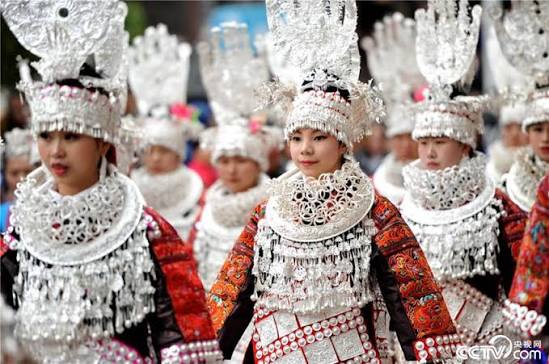
Miao, one of the biggest minority groups in China today (also known as Hmong) claim that they are the descendants of 치우천황. Their traditional clothing is long sleeves and pants, covering the whole body whereas their current diaspora is mainly within South of China in the hot region… if Miao originated from the South, why does their traditional clothing seem unfit for the southern region? Even in their story of origin, it’s said that they crossed three rivers to get to where they are today, and their passed down songs sing about how they were forcefully removed from their peaceful land and had to flee the massacre and moved West. So even today, the origin of Miao people remain a mystery but according to their passed down folklore and songs, they talk about having come from the the East, and many Korean scholars posed that they are prisoners of war from 고구려 / Goguryo when it had fallen to 당 Tang dynasty – Tang record also show that they moved these Goguryo prisoners to current Guizhou region of China which is the Southern area where Miao are predominant.
Why am I explaining all these? Wait – there is a point coming…
In 환단고기, 치우천황 is recorded as 14th Emperor of 배달국 (Bae Dal Kingdom).
In the official Korean history, there is no data about this Bae Dal Kingdom… again, there are only 2 books left that talk about the Ancient Korean history so the Official Korean historical interpretation and rhetoric don’t talk about 배달국… And the Korean history in the land of China / Manchuria / Peninsula have been raped and overrun so many times that Korea lost countless artifacts and books… As a result, Korea is relying on China and Japan today, and the interpretation of Korean history has been heavily influenced to fit to their taste bud of what had happened (China claims 기자조선 and Japan claims 위만조선, and while Korea has 단군조선, the gov has no official stance possibly due to political interest with China and Japan despite the endless dispute and counter-argument from mainstream Korean scholars)
According to 환단고기, Korea is currently in the 9th Kingdom – it goes 환국 (Hwan Kingdom) >> 배달국 (Bae Dal Kingdom) >> 단군조선 (Dan Gun Jo Seon) >> 부여 (Bu Yeo) >> 4 Kingdom period (고구려 Goguryo / 백제 Baekjeh /신라 Sinla / 가야 Gaya) >> 통일신라 (Unified Sinla) + 대진국 /발해 (Dae Jin Kingdom or Bael Hae) >> 고려 (Go Ryo – the name Korea comes from here) >> 근래조선 (recent Jo Seon) >> 대한민국 (Republic of Korea) >> Unified Korea would be 10th. So the official Korean history is missing 환국 / 배달국. 단군조선 is where the beginning is, but Korea doesn’t have own book that talks about it and 부여 is known but missing 95%+ data. The two remaining Ancient history books (삼국사기 / 삼국유사) are mainly for the 4 Kingdom period, but they were written after the its time during 고려 dynasty with the perspective of 신라 who unified, so it lacks in-depth explanation about 고구려 / 백제 / 가야. 고려 history too was re-written during 조선 dynasty with a political aim to downplay 고려 and emphasize 조선, so it’s a biased version… Only decent grasp that Korea has is 조선, the last Kingdom, and even much of that history was destroyed by Japanese invasion in 1592, Machurian invasion in 1636, and Japanese annexation of Korea in 1909 to 1945 when more than 50,000 Korean ancient books were supposedly taken away, sleeping in the Japanese Royal library today which Japan refuses to return… and even further sadly and ironically, 7th King of 조선, 세조 (Sejo) enforced national collection of ancient books to burn them (收書令 / 수서령) because the content of these books were much older than Chinese, so these books may piss off Ming of China… And on this list of books to collect, one of the books is 삼성기, which is 1 of the 4 books used to create 환단고기, so 환단고기 may actually be authentic despite its debate for authenticity in the academic.
Then what is 배달 (Bae Dal)?
If you see the capital of Mongol today (Ulaanbaatar), it gives us a good hint at what it is.
For this purpose, I will be writing in Korean which is phonetic writing, shaping the words as how the sounds are made in the body, and anybody can see that the characters are actually similar.
Firstly, Ulaanbaatar means Red Hero – Ulaan is Red and baatar is Hero, and if i wrote them in Korean…
Ulaanbaatar / 울란바탈 and 배달. If you compare 바탈 and 배달, you can see how SIMILAR the writing looks, and that is because they ARE the same. ㅂ is B and didn’t change, and ㅌ(T sound) in Mongol is ㄷ(D sound) in Korean, and both are Fire sound (Tuesday), so T sound changing to D sound is within the same element of Fire; hence, it’s not even a change. So 배달 means Hero, but sadly, young Koreans these days think this is a delivery app because there is a delivery app named 배달의 민족 (short for 배민) and 배달 / Hero / 倍達 is being mistaken for 배달 / Delivery / 配達… it’s a sad mind-boggling reality for a person like me that the original and essential meanings are being lost and receive no any attention from the Korean population.
The origin of Mongol is unknown, but there are enough evidences to strongly suggest that it’s Goguryo because Goguryo had many different names, and one of them was Mooguri / 畝俱理- the reason why the first word changes to Moo is reference to 맥족 (Mek people), and this Mek also links to Bering Strait Theory and America which I will cover in different post. Actually, Mek alone is incomplete – it is Yeh and the Mek together for YehMek people, and this YehMek is linked to 단군 Dan Gun because Yeh is referenced to the Tiger tribe and Mek is referenced to the Bear tribe. So this is why Mooguri was one of the names of Goguryo, and additionally, in Sanskrit, Goguryo is recorded as Mukri, Byzantine Empire recorded as Moukri, and the Turks recorded as Mokuli on their stone wall Orkhon inscriptions.
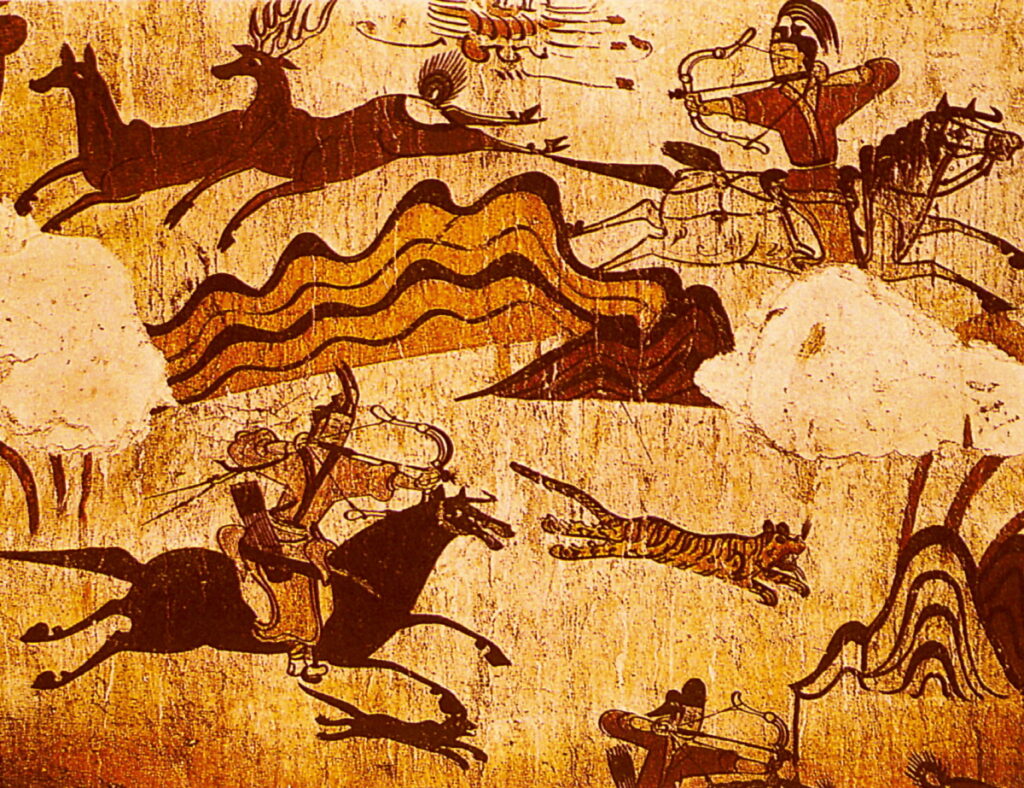
Another huge evidence between Mongol and Goguryo is Parthian shot – both Goguryo and Mongol horsemen were able to turn around while riding the horse and shoot arrows at the chasing enemies. On the left is a very common and well-known picture from the Goguryo tomb mural, and clearly, you can see the Parthian shot being utilized (top right), and this is exactly how the Mongols fought. While charging at their enemies, Mongol Horsemen will shoot arrows that pierced through the armors, so the enemy has to fight back or die, but they can’t catch up to the maneuverability and speed of the Mongol horses then suddenly, the Mongols would turn around and shoot at their chasing enemies… this kind of hit and run guerrilla warfare is exactly how the armies of the world were annihilated… If the Mongols attack you head on, you will be hit – you couldn’t hide or avoid it. If you chase them down, they outrun you and retaliate with Parthian shot while running away at distance… Then if you retreat, Mongol would just turn around and attack you head on again… What can you do? Absolutely nothing… So clearly, this is another strong correlation between Goguryo (Mooguri) and Mongol – the infamous Parthian shot mixed with hit run tactic while riding a horse.
In this Korean book called – 하늘에 새긴 우리역사 (Our history engraved in the sky), it takes all the Solar Lunar activity records of the 2 Ancient books we have left and compare vs the NASA program called Stellarium. Today, we are able to use this Stellarium to reverse back millions of years of star alignment and location to be able to know what occurred where on Earth (just because there was a Solar Eclipse in London, let’s say, doesn’t mean the whole Earth had Solar eclipse), so the Author compared the recorded data from the 2 books and was able to find where the recorded Solar / Lunar / Star activities would have been visible (the accuracy of these Solar / Lunar activities of 2 Korean books was around 70%, and accuracy of Chinese history book was about 50% and Japanese was around 30%; Japan copied lot of the records from China, so many of their recorded solar / lunar activities were not visible from Japan while China just had too many dynasties / destructions and re-recording of the data that seems to contribute to the inaccuracies) and the result suggests that the capital of Goguryo appears as Inner Mongolia today, not Manchuria. 백제 is found in 요하 (Liao river) and 신라 is found in Yangtze river… None are in the peninsula! Are these just crazy claims or the officially accepted knowledge about the land of Goguryo and other kingdoms that we are taught today in the academics may be severely wrong?
Another interesting correlation between Mongol and Korea (even Tibet flag) is that the Flags are the same as below.
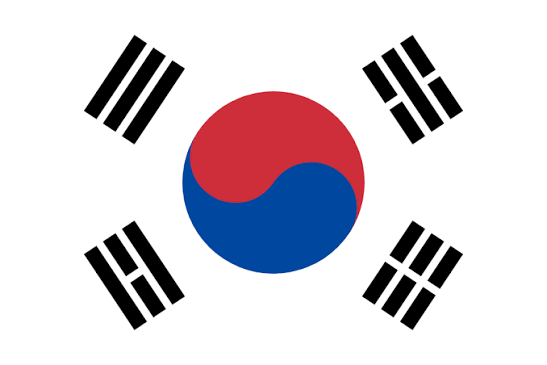
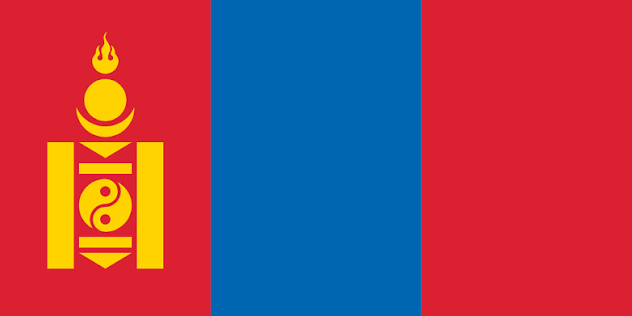
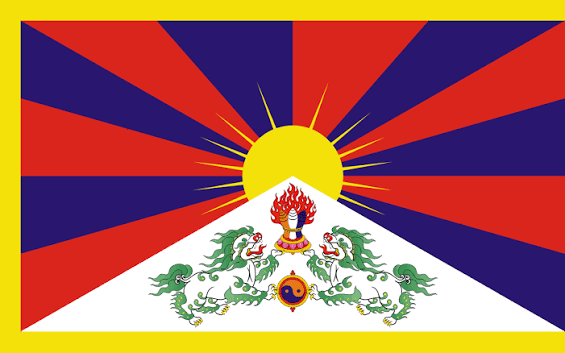
Above are Korean flag, Mongolian flag and Tibet flag, and all 3 have Ying Yang (Moon and Sun) symbols. The color theme is Red and Blue where Red is the sun and Blue is the moon, and the mixture of the 2 colors is Gold, the ultimate color. Crescent Moon and the Gold Star Venus are shown in Mongol / Tibet flags only, but in Korea, the 개천절 (Open Sky day) is the day of Crescent Moon and Venus, which is every Lunar Oct 3rd so although Korean flag doesn’t visually show, Crescent Moon and Gold Star Venus are very relative to Korea as the first day that Korean ethnicity started. And here is a claim that Israeli flag is also same as Korean flag so everyone is saying the same thing in their ways (link – this is all in Korean). And what else is similar in this way? Superman.
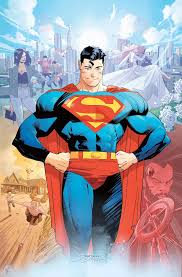
Superman was created by 2 Jewish people, and I stated in other posts that Jews are related to Jo Seon 조선, so it’s obvious that Superman story has characteristics of Sam Jok Oh as below.
To briefly recap… the story of Superman begins with how his home world Krypton is falling apart… so the father and the mother sent their only son out for survival, and upon arrival to Earth, the son hides himself with the help from the two human parents. In the normal times, he is just a journalist at a newspaper company, and when the time calls for it, he unleashes his true self to overwhelm the world and bring complete peace and justice just like Jesus Christ did, who is missing 18 years in the record from 12 to 30 as if Jesus had to flee for survival like the exodus from Krypton, and later when the time called for it, he suddenly appeared to do his job just like Superman unleashed himself onto this world. This is exactly same as the ancient Korean ideology of Sky Land and Person – the infinite creator the Father meets the finite nurturer the Mother and a Person is created – circle box and a triangle!
So if you take a raw blunt angle and interpret this Superman story without any feelings or bias as an Alien would do, the fall of Krypton is like the climate change that forced many people to migrate South looking for better weather and more food, so the expressions about Krypton is an actual historical phenomena that the Ancient people had to resolve, not a fictional creation as we normally take it. And because of this, a mystical and mythical character exits the hostile environment to start a new Kingdom of God. The the story of Di Jun I mentioned in another post is along the same line of thinking as well; the shooting of the 9 suns represents a forceful removal of people due to resource scarcity most likely due to increasing population and lack of food caused by climate change. And those who were removed are forced to find a new land and rebuild a new kingdom with the values and perception of the world which they still held upon themselves. The leaves of the many trees can be different, but the fact that they are all a tree can never change. When everyone was together before the Great Flood, they all shared one centric message, but as the people spread outward due to reasons like the Great Flood, scarcity of food, political issue and etc, they took with them the culture and technology, and expressed these in their own ways as they settled elsewhere So the story of Superman is an expression of this integral teaching of their essence which is same as Korean people – Three and a bird
Many founders of the Horsemen kingdoms in the Far East all have similar stories (Mongol, Khitan, Turks, Magyar, Jurchens, Koreans, and etc). Founding of Goguryo tells of King’s adopted son, who was born from an egg, and he was envied by other Princes for the great archery skill, the look and amazing abilities so they tried to kill him… due to the situation, the adopted son fled and opened Goguryo, but when he was being chased while fleeing, he got stuck at a huge river; then he yelled – I am the lineage of the Son of the Sky 해모수 and the Daughter of the Great Water 하백; let me cross! Then fishes and turtles formed a bridge for him to cross, and surprisingly, these fishes and the turtles are representation of Pisces which is symbol for Jesus Christ… Without a surprise, the stories of the Founders of Horsemen keep showing connection to the Bible because there are historical and cultural ties that can not be broken – just because we forgot the history doesn’t mean the culture of the people forgot as well.
With these that I listed, (Sound changed relationship based on Elements, Mooguri, Parthian shot, location, flags, and Superman), Baatar and Bae Dal can only be seen as the same thing – a Hero, but this is an extended meaning, and by that, I mean – because this is so and so, it means this. Japanese does this a lot like words 대사 / 大事 / Dae sah. This literally means Big Job / Work, and in Japan, it is used to mean take a good care (example – you went to a hospital to meet a sick friend, and upon leaving, you would say お大事に(Oh dai ji ni), meaning that being hospitalized is a big work so please take a good care) Many other cultures or languages do this similar extension from the original meaning to arrive to another meaning, and this Baatar meaning as Hero is no different where there was an original meaning that it jumped off of. Then what does Baatar actually mean?
It means immense Brightness, and it comes from 밝다 Bal Da which means bright in Korean, and this evolved to 배달 Bae Dal, and this is just pronounced as Baatar in Mongol, so 배달민족 ultimately means People of Light, the rightful lineage of the Sky which perfectly aligns with the ideology that Korean has been claiming for many thousand years – Son of the Sky. Therefore, the meaning of Hero in Mongolian is derived from this original meaning of Light, and this is what 배달 means.
2. 백의 (Baek Yi)
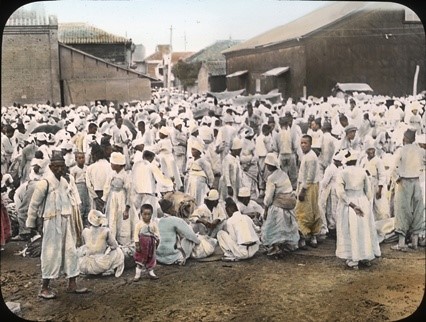
Many foreigners who had came to Korea right before or during the Japanese annexation of 1909 left a lot of records about what they had observed, and one of many things that stand out is that they wrote that Koreans wore white clothing. Percival Lowell, Isabella Bird, Ernst von Hesse-Wartegg… they all wrote that Koreans wore white colors predominantly. Many argue that Koreans like to be clean so that’s why, but white clothing is easy to get dirty and washing dirt or stain on a white clothing is anyone’s nightmare… Wouldn’t it be better to wear something that one can avoid this incessant cleaning? But Koreans still insisted to wear white despite the trouble. Some also argue that Korea lacked the dye technology unlike China, which was true, that Korea wore white predominantly. But the reason that I know that Koreans wore white is because Koreans are the Priest Class – a Shaman
In ancient Shaka / Joosoo system which governed the Horsemen culture, there was a Ranking of Class by color. Gold is on top, then Red, White, Blue and Yellow.
Gold is the King / Emperor, and Red is like the Officers or the Generals. White is the Priests, Blue is livestock raisers and Yellow is the farmers. So this is why Koreans wore white and still call ourselves White Clothing people because we are the Shaman class, but not many Koreans know this… and there are many interesting and obvious evidences that no Korean can deny but hasn’t realized…
If you see recent 조선 Jo Seon dynasty and the colors that the Kings wore… the founder 이성계 (Yi Sung Gae) wore Blue, and the rest of the Kings wore Red, and at the end, the last 2 wore Gold (below), and this is strictly following the Shaka color system.
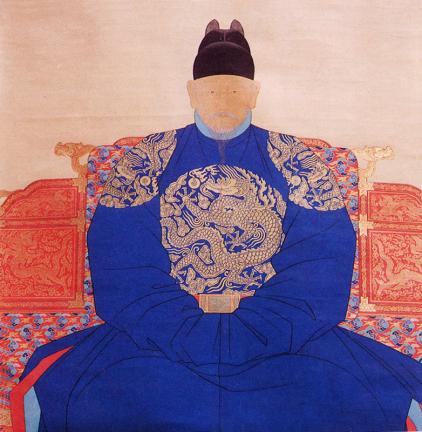
The founder of 조선 Jo Seon was a commoner before he became the King, but a commoner can NOT wear anything higher than his given Class, so he is found wearing Blue. No other 조선 Jo Seon Kings are found wearing Blue when it comes to Official Facial drawing.
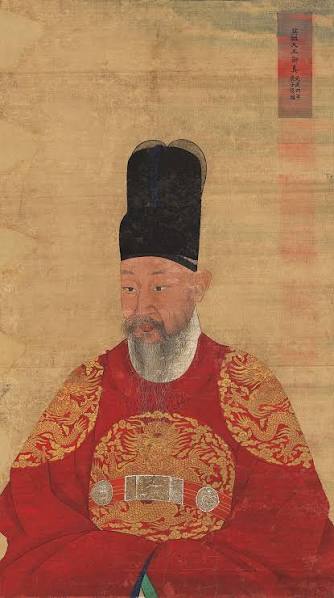
Then why were the rest of the Kings wear Red? It’s because China is wearing Gold… so land of China which was overrun by Horsemen people countless times obviously has this same color system. You won’t find any 조선 Kings Facial drawing wearing any Gold at all until the last 2 rulers.
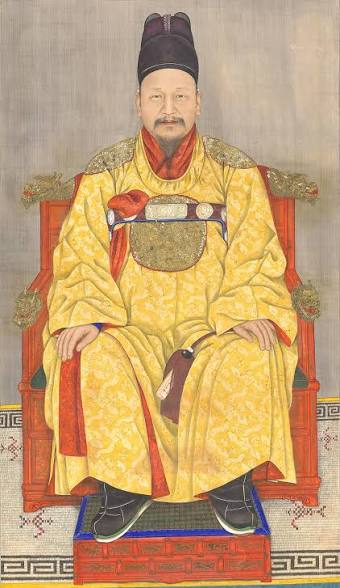
At the end of 조선, King 고종 Gojong renamed the country from 조선 to 대한제국 (Great Han Emperor Country), so that’s why he put on Gold as an Emperor. And additionally, the previous Kingdom 고려 Goryo was openly claiming Emperor Country so they all wore Gold as well.
Look at China / Mongol – what are their National Symbolic color? Red. Why? Because China is a like an Officer and Mongol is like a General, so that’s why Red fits their class. Like this, the color system is still alive, and this is why Koreans are White clothing people because Koreans are Priest class, upholding religious rituals and events or otherwise known as Shamans.
What is a Shaman? This is a Manchurian word, and it’s a person who communicates with the Sky to help the people. And when the Shaman engages in the communication, one would lead by performing the rituals through dancing and singing with offering sacrifices or food, so this is exactly why it’s no wonder that Kpop took over the world because singing and dancing are something Korean DNA has been doing for many thousands of years to respect the Sky as a Shaman as a given social class role.
Top 3 traits of Ancient Korean ancestors like Goguryo as recorded by China are are singing / dancing for days on celebrations, brewery culture, and hygiene care (三國志— 魏書 東夷傳, 後漢書 — 東夷列傳, 梁書 — 高句麗·百濟·新羅), and these 3 major characteristics are also relative to Shamans because in order to properly offer to the Sky, they need to give a performance so being a good singer / dancer is a requirement, and alcohol is an essential part of any religious offerings in many other cultures too like in Egypt. And to show respect to the Sky, cleansing own body to rid of any and all dirt before the ritual was an integral preparation step, so the three characteristics are showing strong relevance to Shamanism and when you consider that the ONLY singular natural resource that Korea has is clean water; 단군 decision to settle in this region may be wasn’t a bad idea to serve the role of a Shaman despite the lack of everything else.
For Chinese, access to clean water has always been a problem in the past and even now.
- The reason why the Tea culture started in China is because of the Yellow river – it was all muddy water that are carried down through the flood. On one hand, it brought down natural minerals for the land to be fertile like how the Nile did for Egyptians, but on the other, it left undrinkable muddy and most possibly baterica-stricken water… It’s like the water you would see after a huge rain streaming down a river bank. Would you drink this? No because it’s dirty, and you will get sick… so the ancient Yellow river inhabitants had to let the water settle to separate the dirt as much as possible then heat up the water in order to kill the bacteria, and they put dried leaves in it to lessen the difficulty of the drinking this water… This is the origin of Tea drinking culture.
- Today, China has 12 dams along the river that starts from Tibet all the way down to SE Asia Mekong River to resolve this internal water problem, and as a result, China pissed off everyone (Thai, Laos, Brunei, and Vietnam to name a few) who rely heavily on the river for survival… So while the land of China has so many advantages that Manchuria and the Peninsula don’t have like the wide open fertile land and the ability to hold huge size population, it just doesn’t have enough water to support this size of people in the Ancient days and in today that they had to build all these dams for themselves while screwing millions of others as well as the ecosystem of the Mekong river. 인과응보 / 因果應報 / Karma is coming, and trust me when I say it will be a REAL bitch when it does because it will come back 10000 times worse.
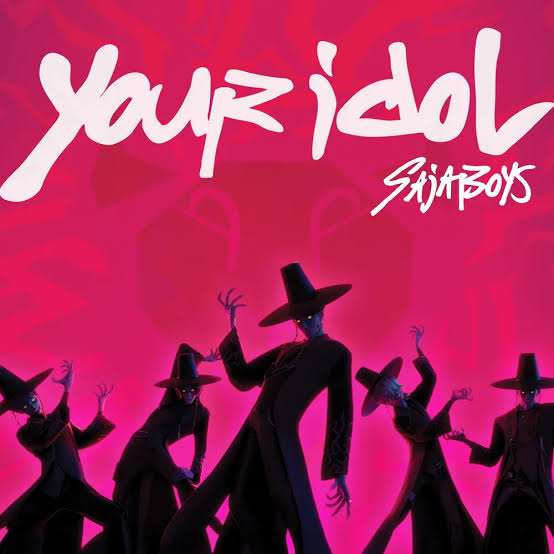
In the Western world, the dead is usually linked with Black, and that is why the Saja boys from Kpop Demon Hunters are wearing Black while singing Your Idol, but in the Eastern world originally, the dead is associated with the White, not black – the black is the effect of Westernization that the it has replaced white as the color for the ghosts in Korea, but the original Eastern context connects white with ghosts (Japan still aligns white with ghost), and the one who deals with ghosts are Shamans, and Korea today is a nation of Shamans without a doubt.
Have you ever had 태몽 (Tae Mong)? This is a baby dream where if someone gets pregnant, somebody nearby in the family will have this dream – even sometimes as far as friends, and this a common knowledge deeply rooted in the culture that every Korean knows what this it and considers it obvious where everyone else should have it too because we do. It is like… I am sure eating a moving live baby Octopus is a delicacy around the world too because it is for us. I am sure people from other culture probably scrub their bodies to rub off the dead skins at the Public Bathtubs and have a paid worker called 때밀이 (Dead Skin Scrubber) who would go in depth all throughout your body to rub all the dead skin off for like 60 mins while you are lying down on a board, 100% naked… I am sure because we have 태몽, every one else should too, but NO! No one else in the world eats a moving live Octopus like Koreans, and paying someone to rub your dead skin off while lying down 100% naked in Public Bathtub is a very special and adamant experience no American-born male can do, and in other cultures, only the shamans of the village would dream of 태몽, and there were only 1 or 2 per village, not like the whole country as Korea is, so yes, Koreans are shamans, and the modern Shamanism in Korea is very scientific and structured unlike the Western mainstream belief, dominated by Modern Science which believes that it’s all fake and hoax, but isn’t the movie, Ghost, with Patrick Swayze, Demi Moore and Whoopi Goldberg exactly about ghost and Shamanism? How ironic that Westerns who abide by Francis Bacon’s ideology of Modern Science and who belittle and degrade Shamanism made a mega success movie about Shamanism…
In essence, Shaka color system shows that White Clothing is Shamanism, and the whole country of Korea is filled by Shamans today, and that is why Kpop has taken over because singing and dancing are something Koreans have been doing as a requirement of our Social Class for many thousands of years.
3. 겨레 (Gyeo Reh)
Finally, the main link to Sam Jok Oh and that is 겨레. Throughout Korean culture, there is a lot of references to 겨레, yet; no one really knows what it is… But if we bring back the Mongolian link with Koreans, it provides an insight into what it may be. In Mongolian, there is a very similar word to 겨레 and that is хэрээ / 케래 / Keh Reh. ㄱ and ㅋ are both Tree sounds along with ㄲ, and ㄹ doesn’t change, so 겨레 and 케래 are pretty much the same thing, and in Mongolian, хэрээ means a Crow, and what is Sam Jok Oh? Three Legged Crow. But isn’t Crow evil? It’s related to Witchcraft! Well, here is an angle at the origin of Witchcraft by reviewing the history of the East and the West.
If you review the past 2000 years of history, there were 2 massive invasions of Asians to Europe. The first is Attila the Hun, and the second is Ghengis Khan.
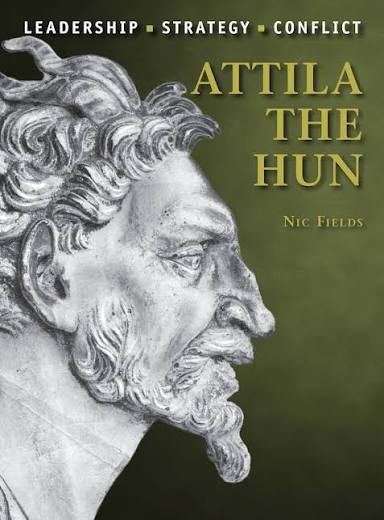
Attila the Hun is taken as the origin of Hungarians, and though Western scholars mystify his origin, there are many solid evidences that these are people of 흉노 Hewoong No. When we discuss the history of Far East Asia, we always have to consider who was controlling the wide vast open plains, and second occupants as we know are the 흉노 (the order goes >> 동호, 흉노, 선비, 유연, 돌궐, 위구르, 키리기스, 거란, 몽골), and my last name Kim is linked with 흉노 with the existing Academic evidences such as 김일제 Kim Eel Jae who received the title 투후 Toowho and the last name Kim from 7th Emperor of Han dynasty accordingly to the records we have left. Moonmoo King Stone scripture also credits 투후 as the origin of the Kim of Sinla dynasty, and because this title 투후 was only given to 김일제, there is no debate when this title 투후 is found in the record or in the artifacts.
7th Emperor of Han dynasty – 한무제 Han Wudi – is very famous for rebuilding the weakened Liu royal family and destroying 1 of 3 흉노 Kingdoms. One thing I want to make a point is that the 흉노 didn’t leave a written record, but they probably didn’t call themselves as 흉노 because 흉 means misfortune and 노 means slavery – it’s a name made by the Chinese Han, and that is how they viewed these Horsemen people because of their incessant invasions throughout the history as old as 주 Zhou dynasty. So we do not know exact sound of their name, but their name had to have some sort of H and N or Ng sound which is why Chinese Han chose the closest writing that sounded similar and also represented their hate for these Horsemen. Also, Horsemen people divided the country into 3 just like Kazakhstan today, so Han Wudi only got 1 of 3, but since the Farmland Chinese Han didn’t know this, they recorded that 흉노 was destroyed. Upon the victory, 한무제 captured the Crown Prince who later is named 김일재, and the reason why he is given the last name 김, which means Gold, is because the 흉노 Horsemen were excellent smelters – I think this circles back to what I said about 치우 and the smelting technology of the Ancient Horsemen people in another post…
Also, before proceeding on, I need to establish about Han. Han Hin Hun Hewoong / 한 힌 훈 흉 – these are all same thing, and it means Son of the Sky.
- India, which should be called as Indo to be politically correct, had H sound in the front, but it dropped because the Persians couldn’t pronounce H in the front, and if you see the sound rule from Korean 훈민정음, it is also because H and Ng sounds are both Water sounds, so H becoming Ng within the same element of Water is a same thing (link); therefore, Hindo becoming Indo (ㅎ > ㅇ) is not even a change.
- Chinese also call themselves as Han, and the name of Korea 대한민국 (Big Han People Nation) is identical to how all the Mongol Kingdoms (except Yuan in China) called themselves which was Han / Khan nation, and that’s why Hun from Hungary is the same Han as Korean Han or Chinese Han or Mongolian Khan.
- Interestingly, Koreans call ourselves as Han within the culture (한국인) whereas we are known to the world as Korea which is from 고려 Goryo which is from 고구려 Goguryo. Similarly, this is also why Hungarian is an externally known to the world as Hungary, and Hungarians call themselves as Magyar which is 말갈 Malgal who were our Horsemen brothers / sisters with Goguryo and who also later becomes an integral social and political group in 대진국 / 발해.
- Even at a linguistic level, there is an interesting correlation when you take the word “Khan” which means leader of the tribe and when you apply the voiceless K rule, it becomes Han… so the leader of the tribe is Khan, and Son of the Sky is Han, and K can drop in English so Khan is same as Han… So it seems crystal clear obvious that both Khan and Han are related, and Han means the Son of the Sky, a rightful Ruler sent from the God to govern this physical human world.
And when I talk about Attila the Hun, I inevitably have to mention World of Warcraft by Blizzard Entertainment because there are many immovable evidences that show the relationship between the Huns and the Horde from WoW.
If you see the Lore, the Horde is composed of Orc, Trolls, Taurens and Undead, and literally, this Horde is the Huns invading Europe, and the Alliance (Human, Night elf, Gnomes and Dwarves) are the Europeans trying to defend it.
- Orc wardrobes and their outer descriptions match very well that of the Huns. No armors to speak of, and all in rags…
- Knotted Hairstyle – this is derived from Sumerian culture where the knotted hair symbolizes the rays of sun shining down upon us, and all Orcs had their hairs knotted unlike Europeans
- Riding horses in Horde – they both were great Horse riders and were described as a Horde – this word was never applied to European army or Alliance
- Composite Bow – both were Horsemen who shot arrows while riding around on their horses
- Both emphasize Warrior culture – both are very aggressive and eager to fight where their worth can be proven
- Medivh – he is a critical character in the story. He is a human mage and turns into a Raven… isn’t Raven same as a Crow? When these Huns originally came, they held the ideology of the Far East – Dragon and a Bird
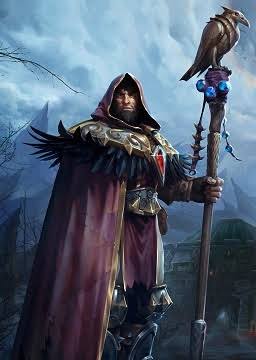
So the transformation of Medivh into a Black bird is another strong correlation between the Huns and Sam Jok Oh and with the previously mentioned similarities, it’s difficult to say that there is nothing between the Huns and the Horde. And off of a tangent with the Black bird is the Dragon and why is Dragon evil in Europe whereas it is Holy in Far East Asia? Two best examples to depict my meaning and feeling are the movie series – Shrek and the world famous Japanese Anime – Dragon Ball.
Shrek universe really shows well that the Europeans hated Dragons because of the relationship to the Horsemen who kept ruining the land. Only singular Dragon story in Europe goes like the Shrek story – evil Dragon kidnaps the Princess, and the Prince must go save the Princess. Why does Europe only have this one type of story about Dragons? Well, it’s rooted in the historical influence of the 2 massive Asian invasions starting with Attila the Hun. When these Asians came, nothing good happened to Europeans… many were killed and Black Death started because the Mongols catapulted over a few sick soldiers that started the wide spread destruction in Europe, so this is why the story of Shrek is about revenge and hatred – they couldn’t stop the Horde in real life, so at least in a fictional story, the Europeans wanted to win – just a mental victory I suppose.
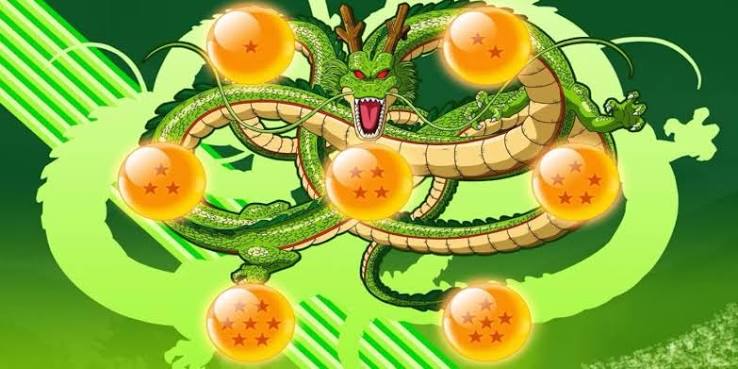
Whereas in Asia, what does Dragon symbolize? Look at Japanese Anime Dragon Ball. Collect 7 Dragon Balls, and Shen Long (God Dragon) will grant one wish. It’s a complete opposite interpretation than an evil monster in Europe, and again, it’s rooted in the history of Asian invasion into the West with Dragon / Phoenix culture in the past 2000 years that both Dragon and Bird became a symbol of fear and unholy in Europe.
Around 200AD is when the 흉노 from Far East Asia started to move Westward, and around 400AD, Attila the Hun appeared in Europe, so 200 years from Mongolian plains to arrival in Europe is plausible and does make sense; there are now many evidences of the Hun movement thru tracing the movement of the bones / DNA, and all these point that 흉노 and Huns ARE the same group of people recorded in the history books. Although the names when written in English may look irrelevant, if you view in Korean writing (phonetic writing), you can see that the 흉 and 훈 and 한 are very similar with H ㅎ and N ㄴ or Ng ㅇ, so it’s not too far-fetched to say that these are all same thing based on the sound.
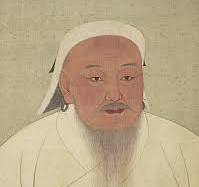
The 2nd Asian invasion is the world famous Mongol invasion. As they moved west from Asia, the Mongols left its mark in the world history and strengthened the existing ideology of Dragon and a Bird in Europe, and because they came from the same region as 흉노 but in different time, Mongols also possessed the Snake Dragon culture just like their ancestors, the Huns.
In their long journey of Conquest, the Shamans accompanied the army because they had to tell the Fortune for the upcoming battle – based on the reading, the army may change their tactics or even retreat, so bringing Shamans determined the morale of the soldiers as well as decision-making process on how to fight. And what did these Shamans carry with them? A black bird because of the Sam Jok Oh ideology, so naturally, when these Shamans who were mostly women settled in the regions conquered by the Mongols, they evolved into what we know today as Witches in Europe.
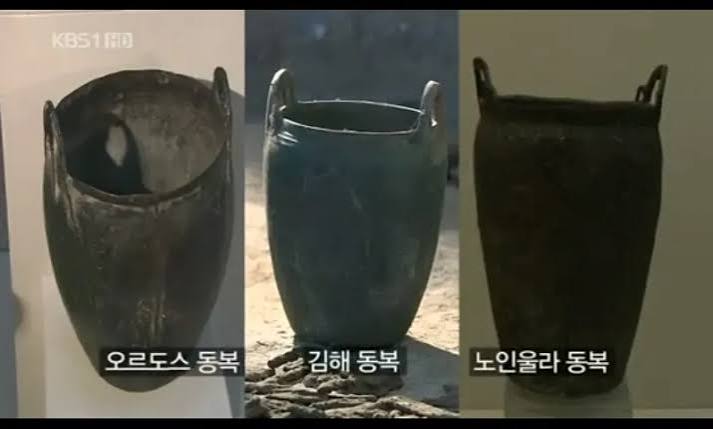
Another critical evidence between Witches and Shamans is Dong Bok 동복. This is basically a mobile pot that Horsemen carried with them with food / water / ritual items, and these are found in South Korea, Ordos River in China, and throughout Central Euro-Asia where the Horsemen had swept thru in the past, and this is why Witches are always boiling or cooking something in a huge round pot since this is the main item that Horsemen used everyday for anything and everything – once the men finished their ride of the day, they would all gather around with their Dong Bok at night and started cooking food or prepared to give rituals to the Sky, so most of their activities during the camp time always revolved around Dong Bok; hence, for Witches, who are originally Shamans from Asia and who lived with these Horsemen fighters are attuned in using a huge Pot as part of daily lifestyle.
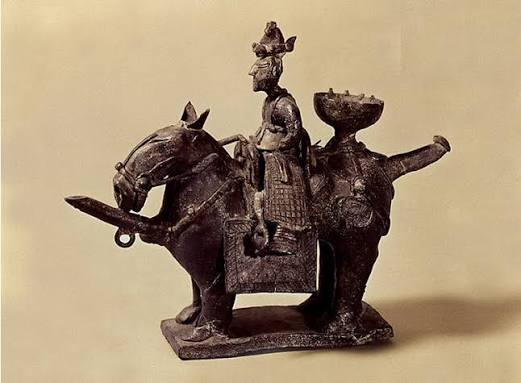
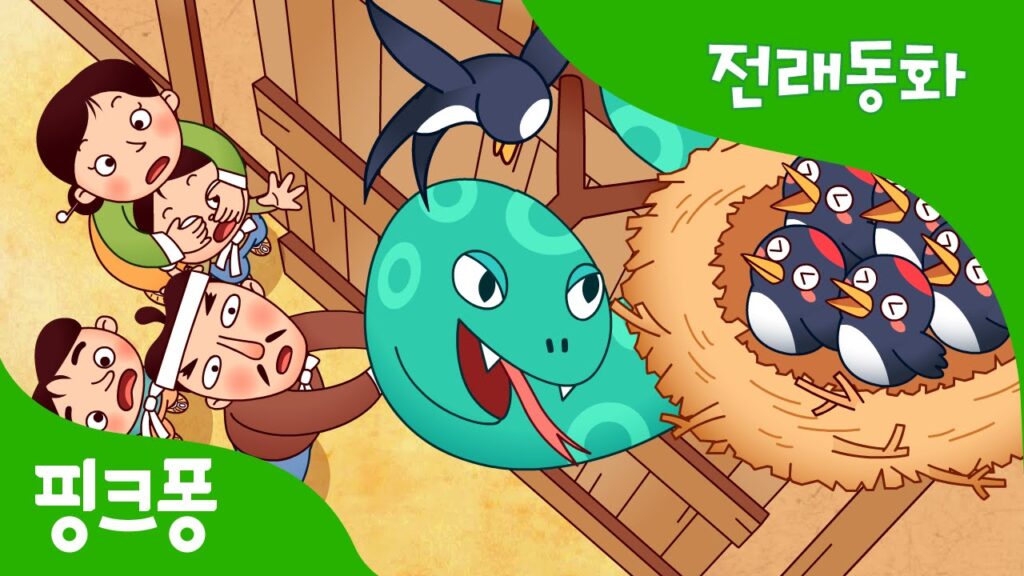
In recent 조선 dynasty (the last Kingdom before Korea today), there are many stories about the Bird, and the most famous is 놀부 and 흥부. It’s a story of 2 brothers where older brother is greedy and kicked out his young brother who is kind. One day, 까치 (magpie) makes home at the younger bro home, and a baby bird fell down trying to avoid the snake attack. In doing so, the baby bird broke its leg, so the younger bro helped heal, and the birds flew away, following the seasonal move. A year later, the baby bird came back and dropped a pumpkin seed, and when they opened the ripe pumpkin a few months later, bunch of gold and treasures came out. Older bro heard of this and artificially repeated the pattern by intentionally breaking the leg of a baby 까치 and a year later, that baby 까치 flew back and dropped a seed too but from it, came monsters misfortune and evil. This traditional story shows how Sam Jok Oh notion is carried on in Korean culture, and I personally also add on that the pumpkin seed may be why witches and pumpkins are relative to each other.
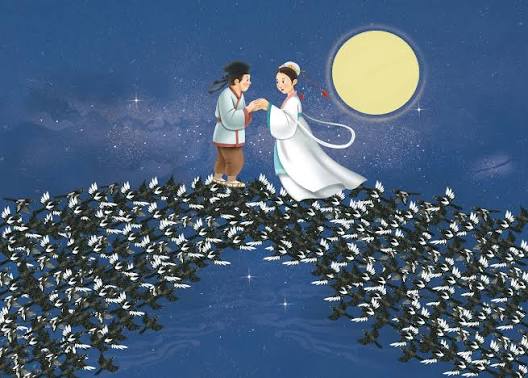
Another story in Far East Asia about the Bird ideology and Bible is the story of 오작교 (Writing of 오 / Oh / 烏 is for Crows and Magpie). There was a farmer / cow raiser, 견우 and 직녀, the daughter of Jade Emperor or God, who was a Silk clothing weaver, and they were lovers, but the Jade Emperor prohibited their love and separated them by the making a huge River called Milkyway, so only once a year on July 7th over a bridge made by Crows and Magpies, they were able to meet, so here, black Bird serves a critical role in accomplishing the love for 견우 직녀. In addition, if you review linguistically, you can see that sound meaning of 견우 직녀 is same as Adam Eve. The Bible says Adam is a farmer / cow raiser just like 견우, and Eve is a weaver as can be seen in the word itself (weave and eve) just like 직녀 , and because humanity was moving into a civilized lifestyle, clothing was a huge breakthrough so weaving became a key essential necessity that represented higher culture and technology, and whoever had higher culture and technology was revered as God, so that’s why she is the daughter of Jade Emperor, the God. Moreover, the birds created the bridge for these two to meet, so the whole story is Bird Totem story, and the Jews are Bird Totem people just like Koreans that this same activity was Aquila and Vegas allowed two different stories and interpretations to come out.
배달 / 백의 / 겨레
These 3 callings of Korean people exemplify the notion of Sam Jok Oh through emphasizing important ideas that are lost or smudged in the history, but with the small pieces of residue that are left through culture like food, language, and rituals, we can try to put the pieces back together, hoping to complete this huge puzzle that shows more of the Truth of what had happened in the past that we have come to the present and where we need to go in the future not just for Koreans but also for the whole Humanity.
I hope it is a bit more clear for those Koreans what these 3 mean, and for anyone who read this message, I hope this can provide knowledge that breaks the norm and challenges the status quo because if I say that Koreans and Jews are related, everyone will think I am crazy… but how crazy am I when these information are present? How unrelated or related are the Koreans and the Jews? To me, Holy Trinity and the Bird culture of the Bible story and the Sam Jok Oh, the Three legged Crow, are really not that far at all, and is it just the Koreans and the Jews who are similar? No… this Sam Jok Oh information crossed many different people and many different cultures to the West and to the East, and it is a repeating theme found throughout the World.